I spent a long time hating my natural curls, but as I learned how to care for them, I began to love them.
For anyone transitioning or figuring out how to embrace their curls, the goal should be to understand your hair, listen to it, and work with it instead of trying to force it into some standard of perfection that may not be achievable.
To truly love your curls and get great results from your wash day routine, you'll first need to determine exactly what kind of hair you have.
Your hair has a voice and a personality, its own way of showing you what it likes and how it behaves. To care for your curls properly, focus on the defining trio: density, porosity, and texture. Understanding these gives you a solid foundation for everything else.
Your Hair’s Density
Hair density is simply how many hairs grow on your scalp in a given area. It’s not the same as thickness. You can have coarse, thick strands with low density, or fine, thin strands with high density. There’s no good or bad density, just the hair you have.
Here’s a quick guide to help you figure out yours:
-
Low Density: Scalp shows easily. A ponytail feels small, less than about two inches around.
-
Medium Density: Scalp is visible only with a slight part. A ponytail measures around two to three inches.
-
High Density: Scalp is barely visible, even when parting the hair. A ponytail measures four inches or more.
Curl Product Recommendations Based on Density
When layering products, it’s important to consider your hair’s porosity and texture so each product can absorb properly and give the best results. These recommendations are based on density only, so compare against the other recommendations based on porosity and texture to see what will suit you best. If you need help deciding, let us know!
For low-density hair, heavier products can weigh curls down, so it’s best to choose options that encourage lift and volume. A few good ones are:

Extra tips: Use lighter conditioners (like a leave-in conditioner as a rinse out) or dilute heavier products to prevent buildup. Styling your hair while damp helps create extra lift, and gentle diffusing or upright styling can make your curls look fuller and bouncier.
For high-density hair, more strands in each section can make your hair feel bulky. You’ll want products that give moisture and control without weighing it down. Try:
Cuts that reduce bulk, like layers, make styling way easier. Pair that with gentle styling methods: diffusing in sections or twisting to stretch curls and your hair will be way more manageable.

Your Hair’s Porosity
Porosity is how well your hair absorbs and holds moisture. It all comes down to the cuticle, the outer layer of your hair. Think of it like shingles on a roof: flat, tight shingles make it harder for water to get in, but once it does, it stays. Raised or damaged shingles let moisture in quickly, but it slips right back out. Some people’s hair is naturally more porous, even without any damage.
How Hair Feels and Behaves Based on Porosity
-
Low Porosity: Hair can feel a bit resistant to products at first but stays hydrated once moisturized.
-
Medium Porosity: Hair takes in and holds moisture easily, responding well to most products.
-
High Porosity: Hair soaks up moisture fast but dries just as quickly, often feeling brittle or dry soon after washing.
Recommendations For Low Porosity Hair
-
Use lightweight leave-ins on soaking wet hair. Add water or dilute stylers if needed.
-
Choose film-forming humectants like flaxseed gel, aloe vera gel, marshmallow root, slippery elm, panthenol, xanthan gum, or seaweed extracts.
-
Include hydrolyzed proteins - more if your hair is fine, less if coarse.
-
Use tiny amounts of lightweight oils, even as a pre-shampoo treatment.
-
Limit heavy conditioners with cationic compounds.
-
Heat treatments, like deep-conditioning with heat, can help.
-
Cleanse deeply when needed: clarifying shampoos like Bounce Curl Gentle Clarifying Shampoo, Malibu C Hard Water Wellness Shampoo for hard water, or Jessicurl Gentle Lather Shampoo for frequent use.
- See our collection of product recommendations for low porosity hair here.
Recommendations for High Porosity Hair
-
Go for richer stylers with oils (castor, olive, coconut) and butters (shea, cocoa, cupuaçu) to lock in moisture.
-
Condition after every shampoo; co-washing or deep conditioning helps manage dryness.
-
Layer products to seal: curl creams, leave-ins, or primers first, hold stylers in the middle, oils last on damp or dry hair to lock in what's underneath.
-
Refresh between washes to maintain moisture. This doesn't always mean adding water - sometimes it's adding a bit more of a moisturizing product to keep hair from feeling too dry, like the Curlsmith Moisture Memory Reactivator.
-
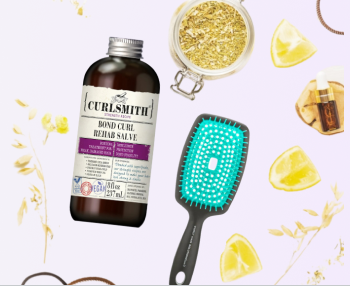
Silicones can be helpful, and protein treatments like Curlsmith Bond Curl Rehab Salve, Olaplex or K18 Leave-in Molecular Repair Hair Mask help strengthen your strands.
-
Adjust product weight if your hair is fine to avoid heaviness.
- See our collection of product recommendations for high porosity hair here.

Your Hair's Texture

Texture is a big deal. It guides how you pick products and styling methods that actually work for you.
How to Figure out Your Hair Texture
By feel: Take a single strand and roll it between your thumb and forefinger.
-
Fine: barely there, can hardly feel it
-
Medium: noticeable, but not stiff
-
Coarse: solid, easy to feel
Compare it to sewing thread on something you're wearing or from a sewing kit: Lay a strand next to a piece of thread.
-
Fine: thinner than the thread
-
Medium: about the same
-
Coarse: thicker than the thread
Curl Product Recommendations for Fine Hair
-
Go lightweight. Light conditioners and leave-ins are your friends, and sprays or diluted products help avoid buildup.
-
A tiny bit of oil goes a long way. Use as a pre-shampoo or for sealing, just enough to smooth without weighing curls down.
-
Light styling products like mousse, texture sprays, or dry shampoo can add volume and lift.
-
Protein treatments help your curls stay strong.
-
Don’t ever skip clarifying as additional product build up makes hair feel heavy and weighed down.
-
Style damp or diffuse gently to keep curl shape and bounce.
-
Strong-hold gels help curls last longer.
-
Haircuts: blunt cuts add fullness, soft or face-framing layers work if you’ve got density, and graduated cuts or pixies are also options.
- See our collection of product recommendations for fine hair here.
Curl Product Recommendations for Coarse Hair
-
Condition thoroughly after every wash. Deep conditioners or co-washing can be very helpful.
-
Hot oil treatments add extra moisture and softness.
-
Use curl creams over leave-ins for better definition.
-
Layer products if needed, finishing with oils to seal in hydration.
-
Refresh between washes to maintain moisture and curl shape.
-
Haircuts: soft layers work best; avoid blunt cuts unless your density supports them.
- See our collection of product recommendations for coarse hair here.
How to Tell if a Product is Right For Your Curls
Sometimes it’s pretty obvious when a product is actually working - what I like to call “happy hair.”
-
Are your curls defined, smooth, or shiny after using it? That’s a clear yes.
-
Does it feel soft, full, and easier to detangle? Products that manage tangles and leave hair feeling thick usually work well.
-
Check your scalp: if it feels balanced and comfortable, that’s another win.
-
Can you style the next day with just a spritz and go? If yes, your hair is enjoying it.
Coping with Transitioning Hair
-
Let go of relaxers and frequent heat so new growth can come through healthier. If you use heat at all, keep it occasional and always apply a heat protectant.
-
Support your hair with regular moisture and strength. Deep conditioning, light protein treatments, and gentle detangling go a long way. Trim the ends when they start holding you back.
-
Try heatless styles like braid-outs, twist-outs, bantu knots, or flexi rods: they help your roots and ends look more in sync. Protective styles can also take pressure off day to day.
-
Take it slowly. Transitioning is a process, and consistency matters way more than getting everything right.